
A studio’s own site
Paleovista
Victor Leshyk’s studio runs the Triassic diorama from its own site — Blue Mesa’s Late Triassic, stop by stop, with his reconstructions as the stage.
The Diorama Engine™ invokes interactive environments. It takes a theme — a story, a collection, a research set, a location, a body of work — and performs it. Content opens where a visitor looks or touches...
A working Diorama Engine demonstration. All artwork presented here is original work by Victor O. Leshyk.
Journey 1 of 3 — A World of Subjects: art, science and editorial work.
Running in the demo. Artwork by Victor O. Leshyk.
Diorama Engine packages can be presented on a kiosk in any space, projected on a performance stage, on a phone in a hand, or in any web browser — all live in the demo here »
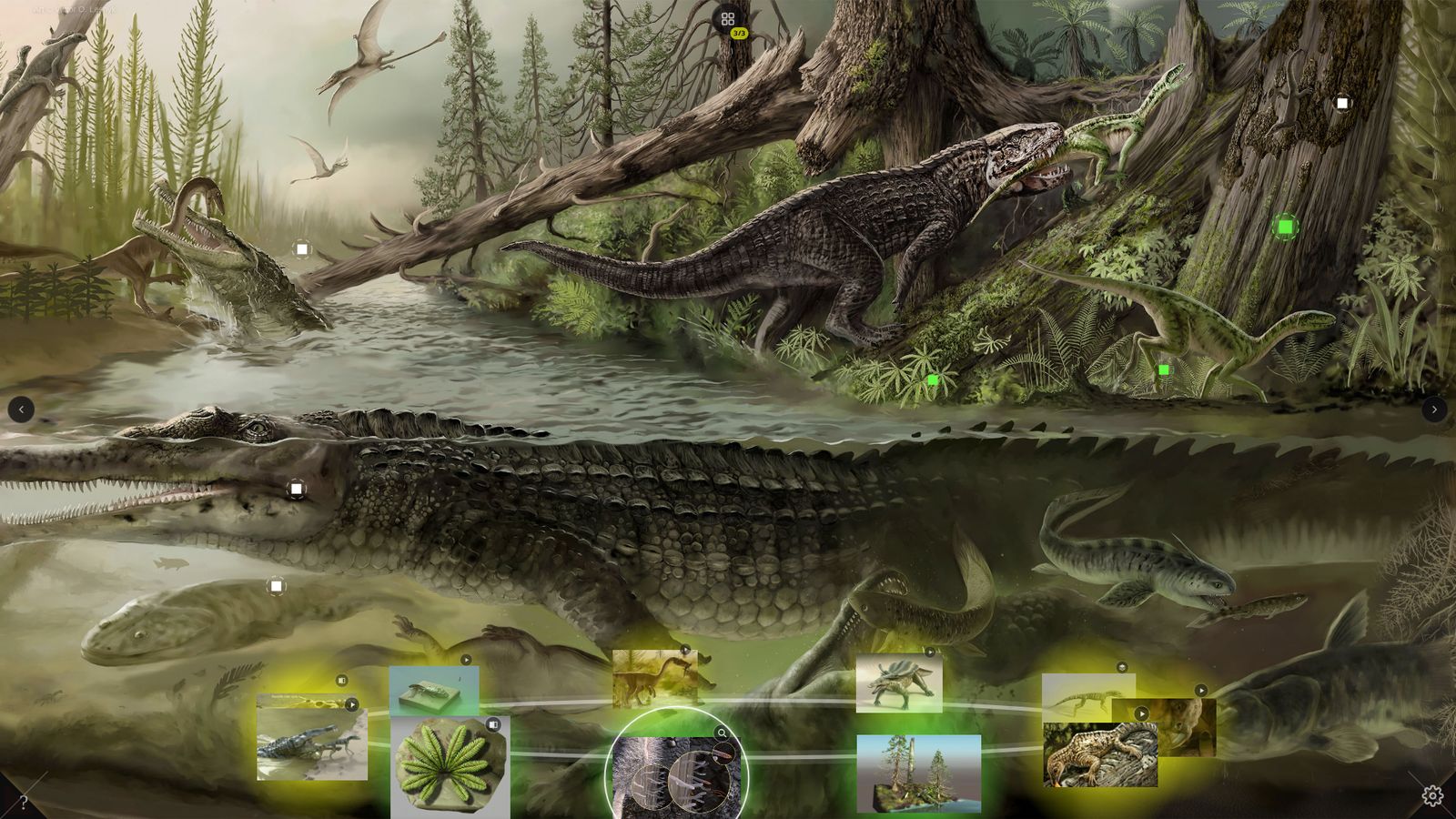
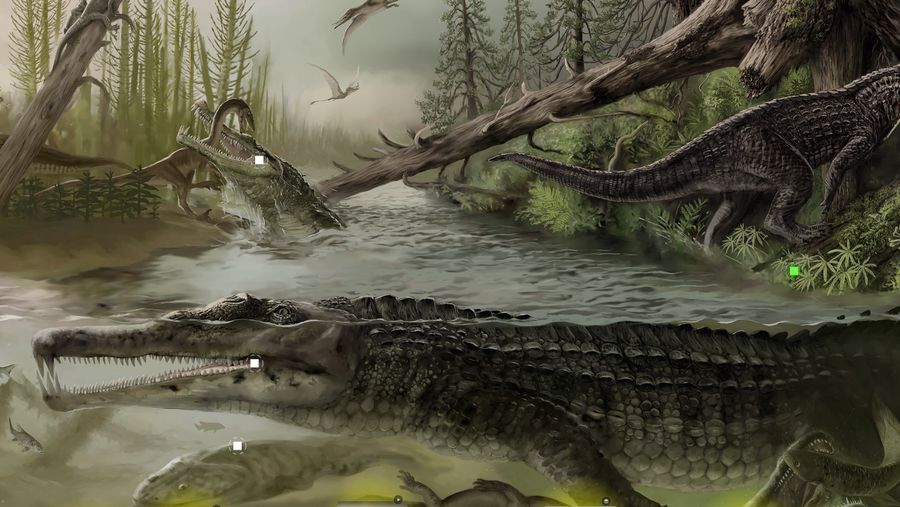
Triassic forest of the Blue Mesa, c. 225 million years ago. Artwork by Victor O. Leshyk, Paleovista.
One minute inside a running package — the day moving over the scene, points of interest opening, inviting a visitor to actually interact, or simply watch it evolve…
Frames from the demo as it runs — the way in, content opening, two ways through, the content itself, and the controls around it.
Tap any frame to see it whole.
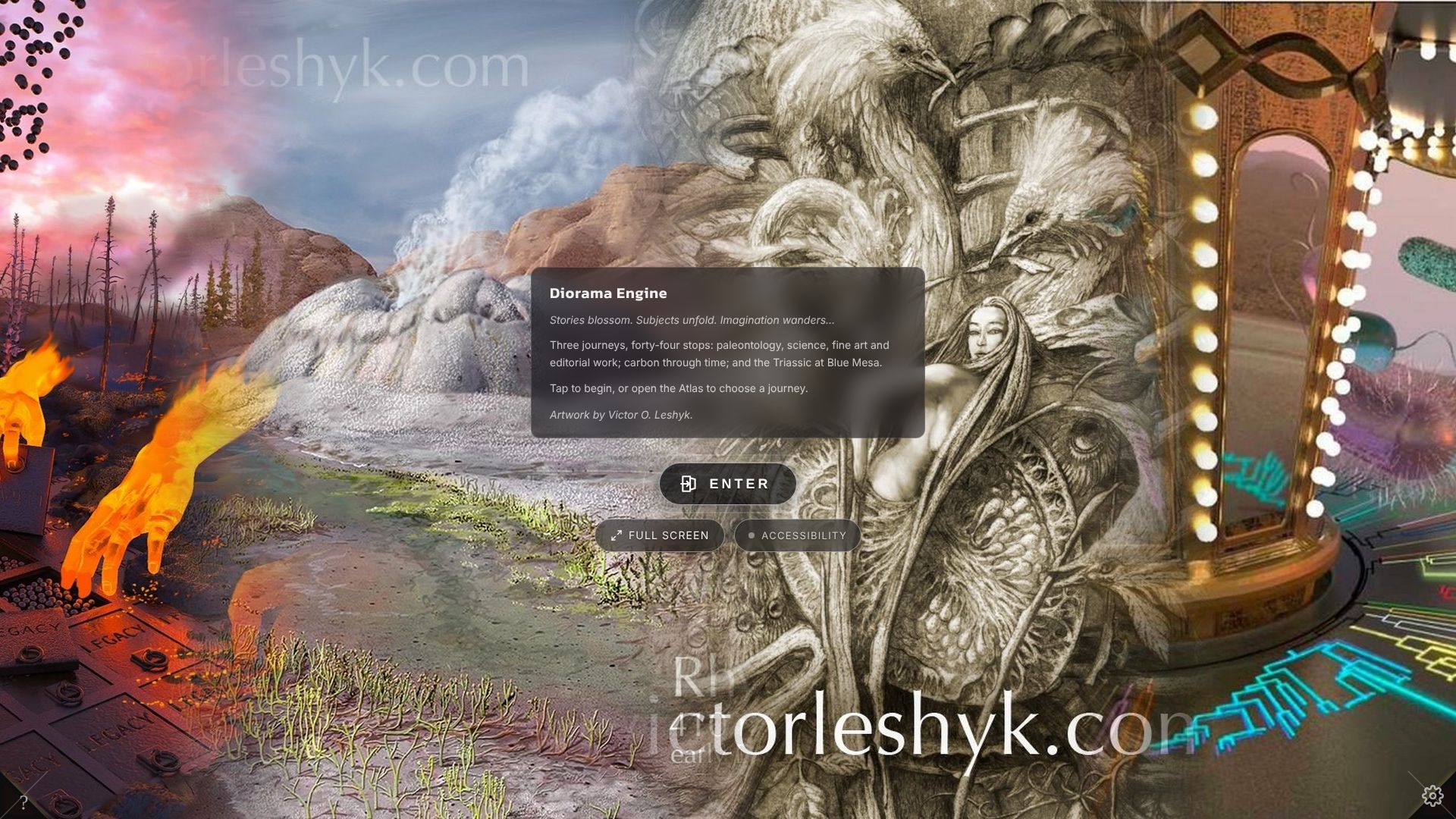
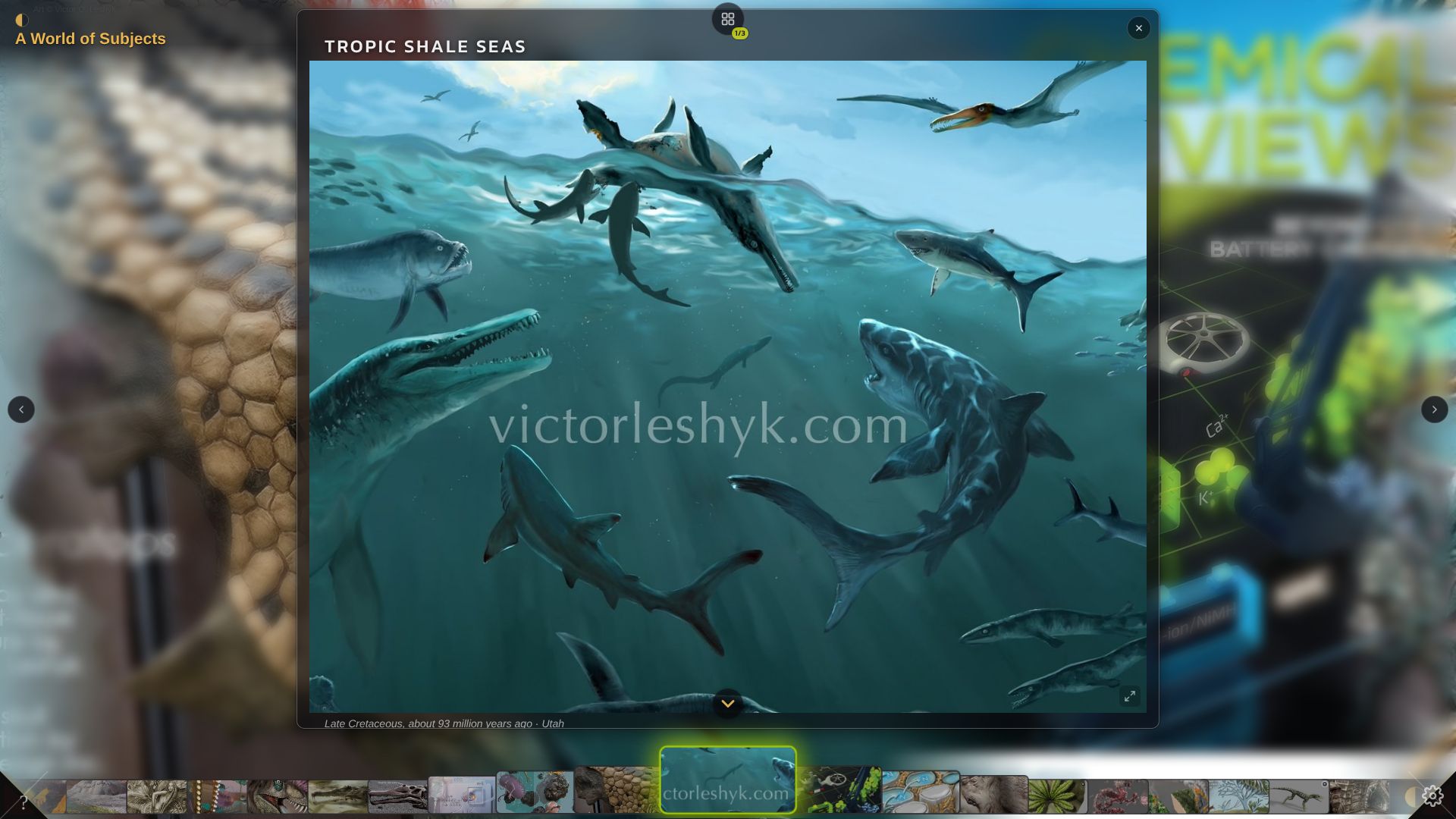
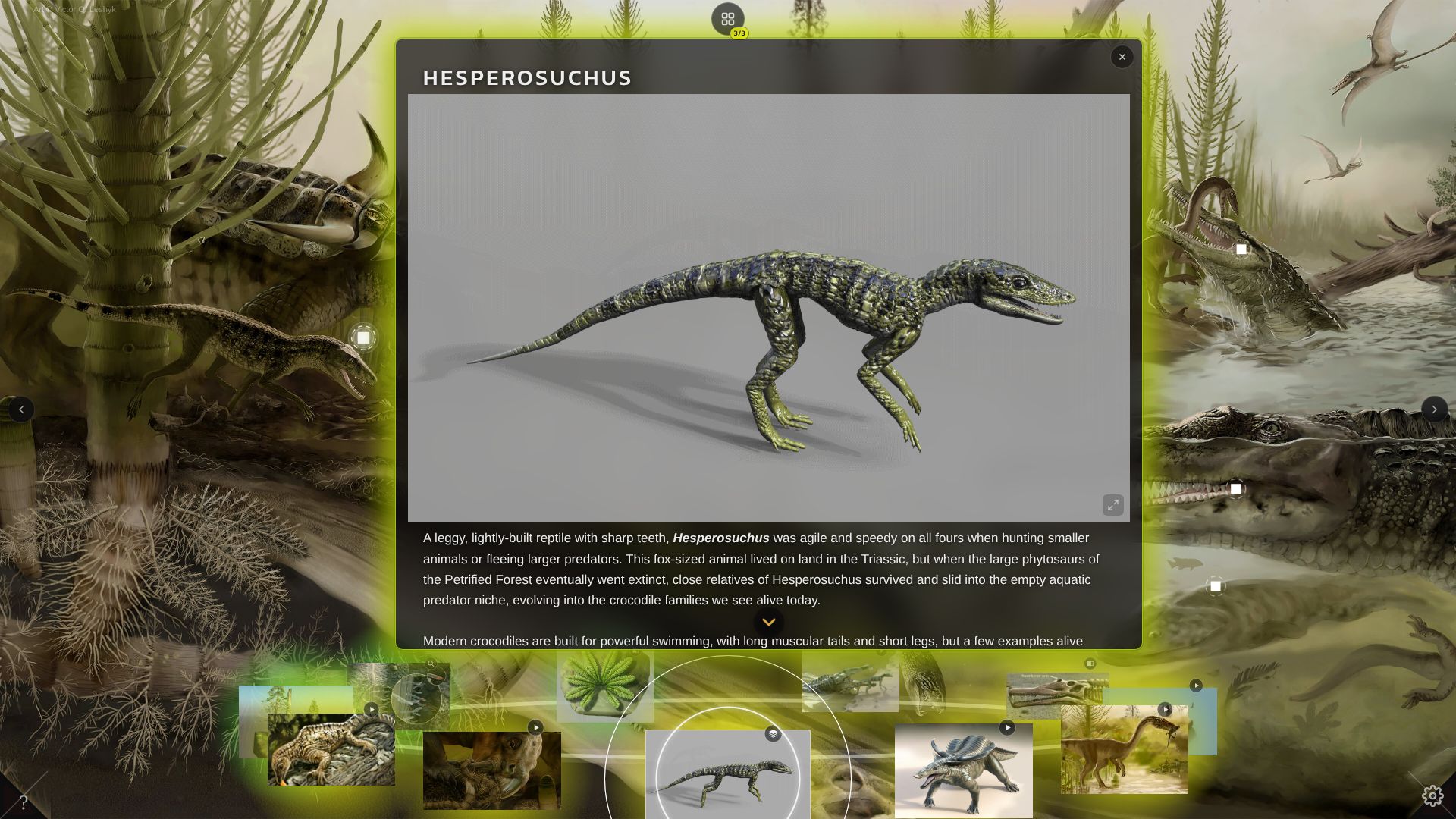
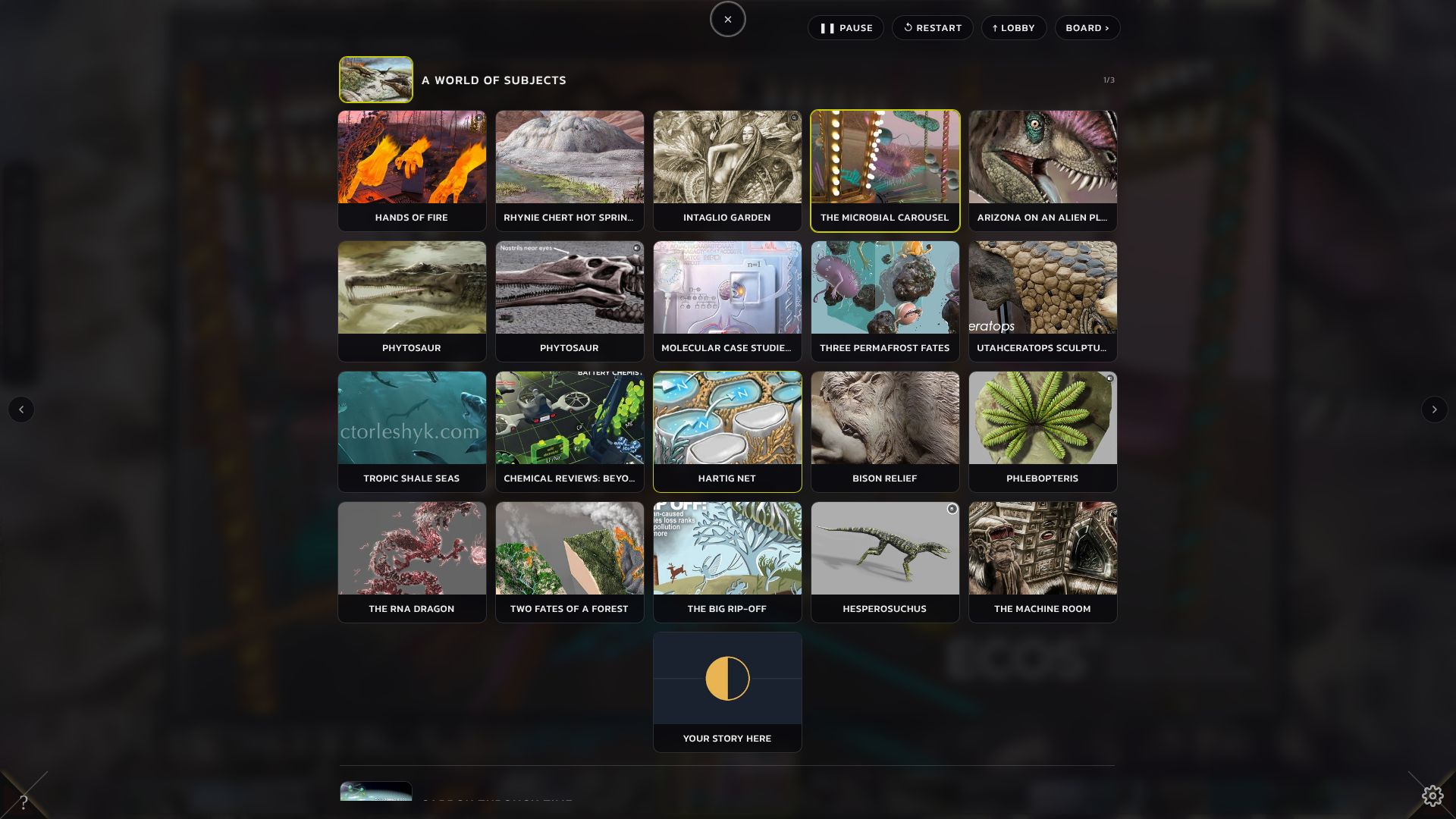
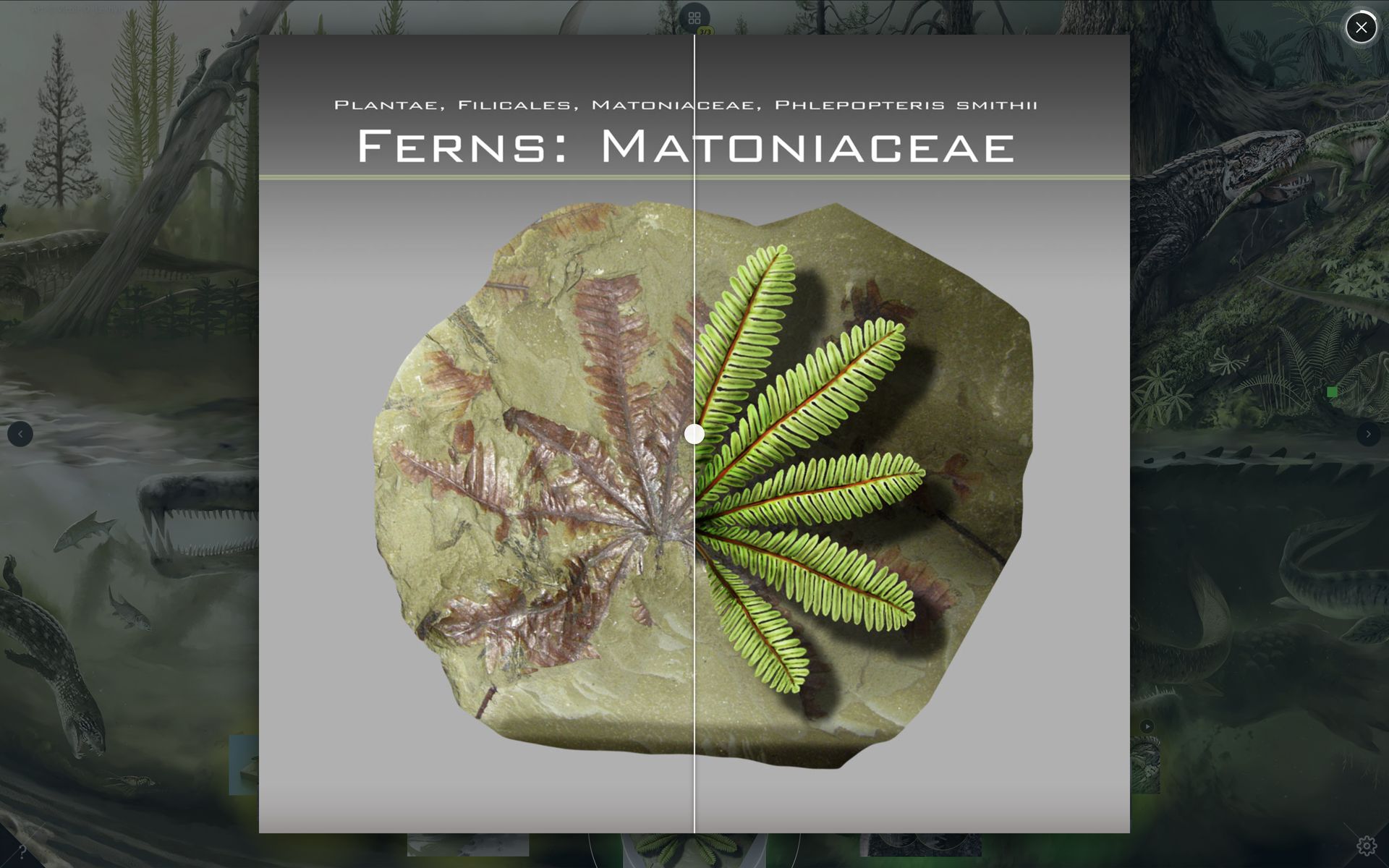
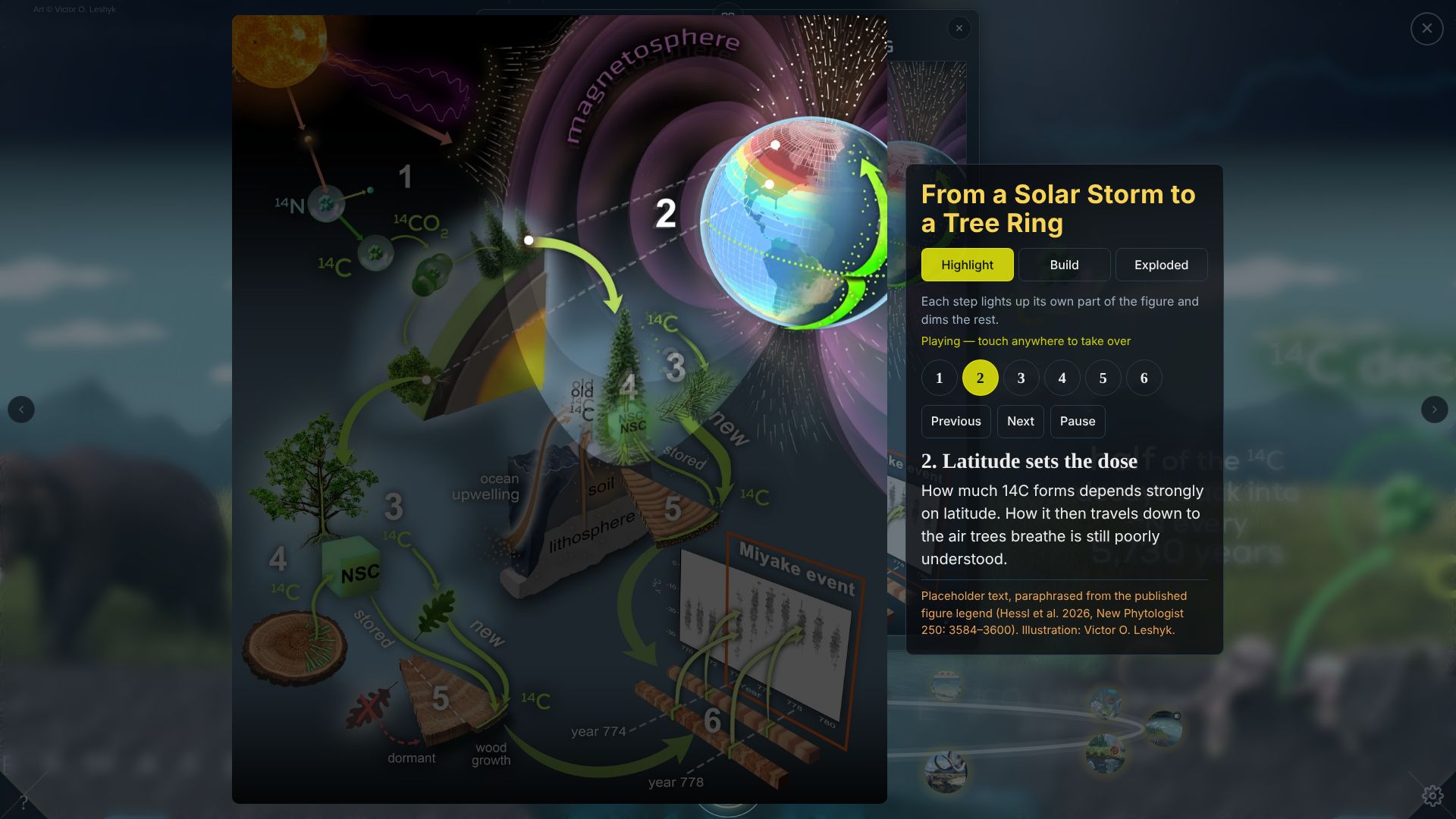

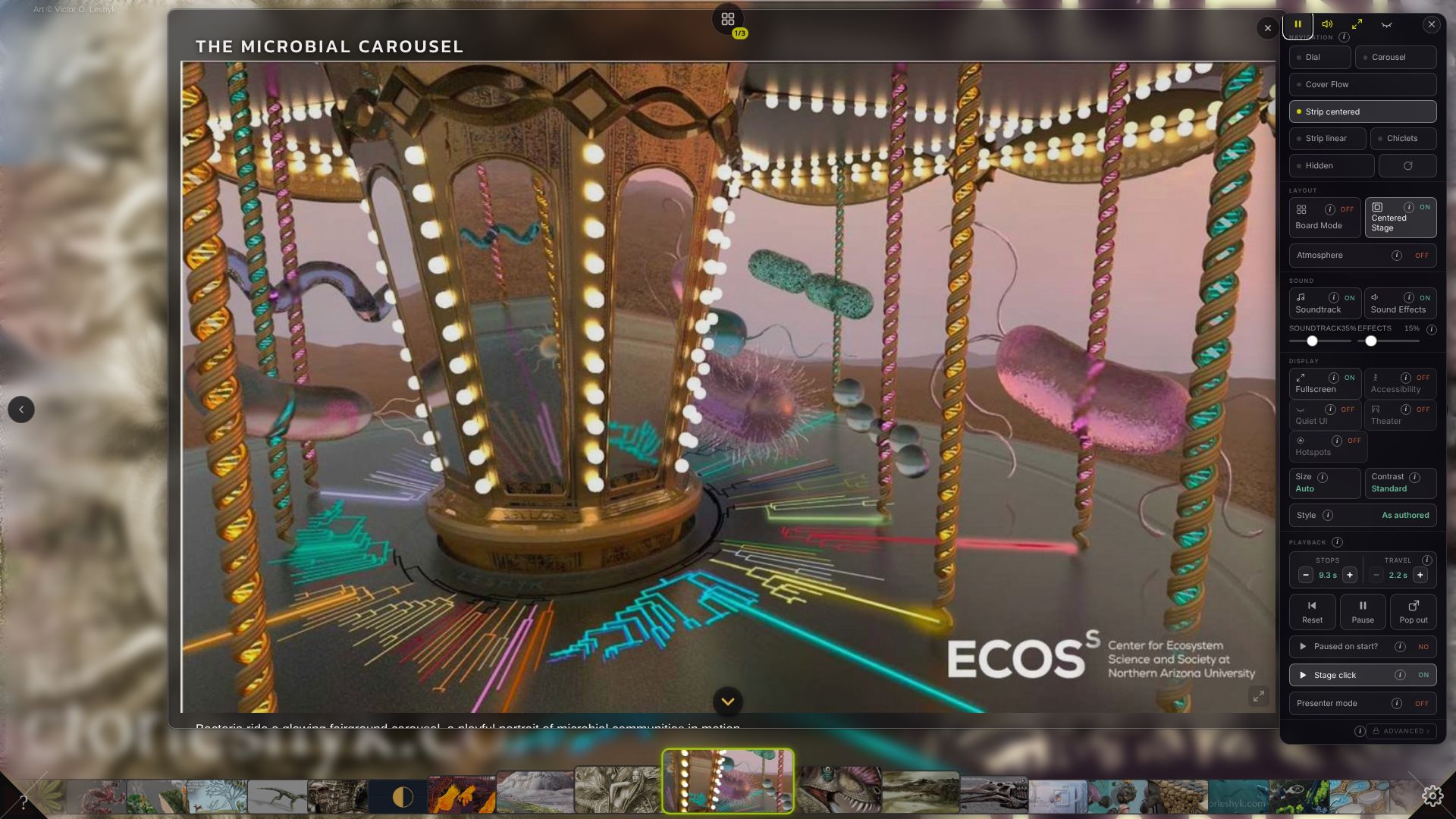
The engine knows nothing about the Triassic. It reads a content package — images, timings, text, effects, translations — and performs whatever is in it.
Swap the package and the same engine performs a different place: a canyon, a shop floor, an excavation, a gallery wing. That is the whole architecture, and it is the reason a second installation is mostly authoring rather than engineering. It is also why a venue can change what a visitor reads on a Tuesday without anyone rebuilding software.
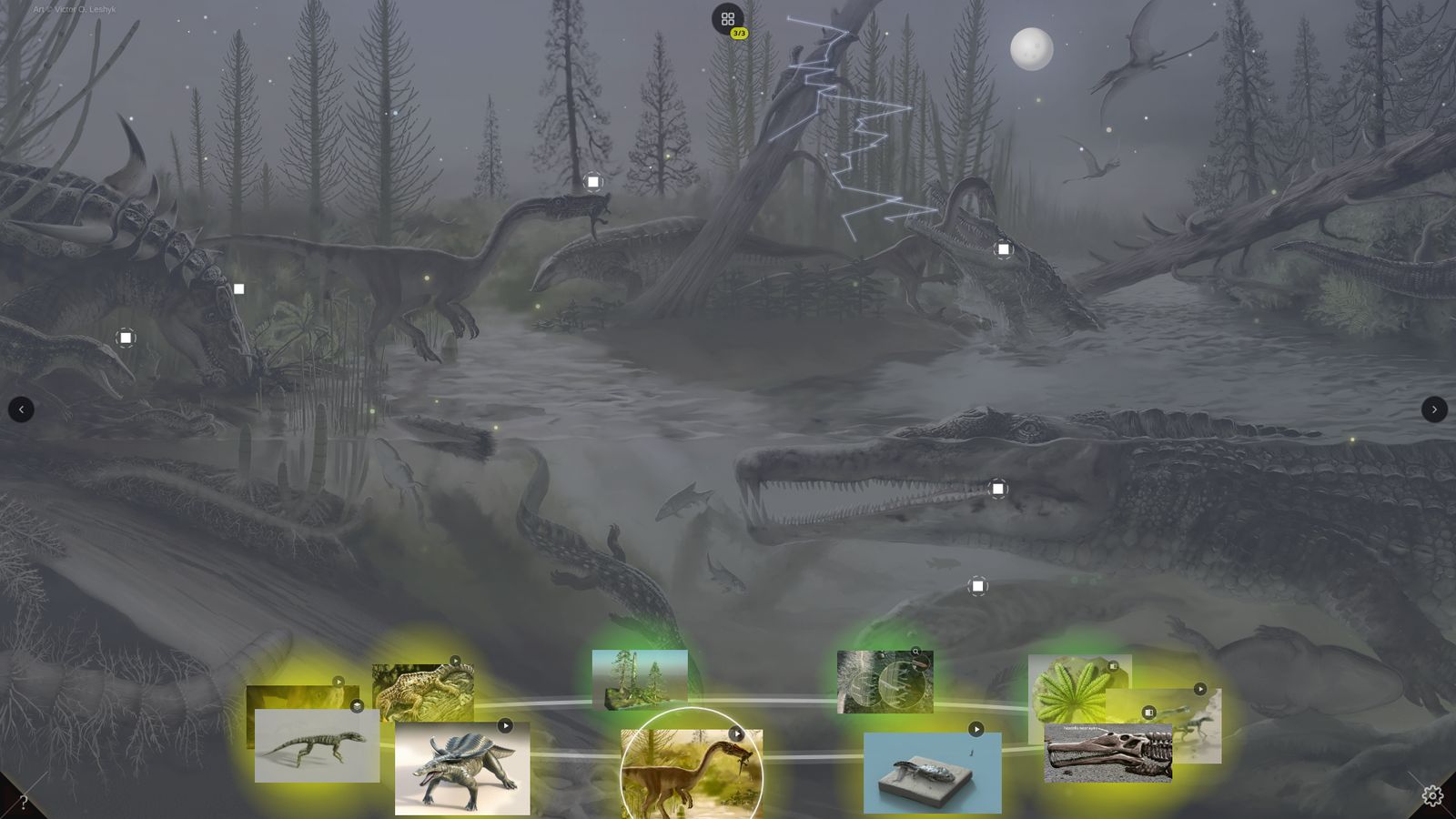
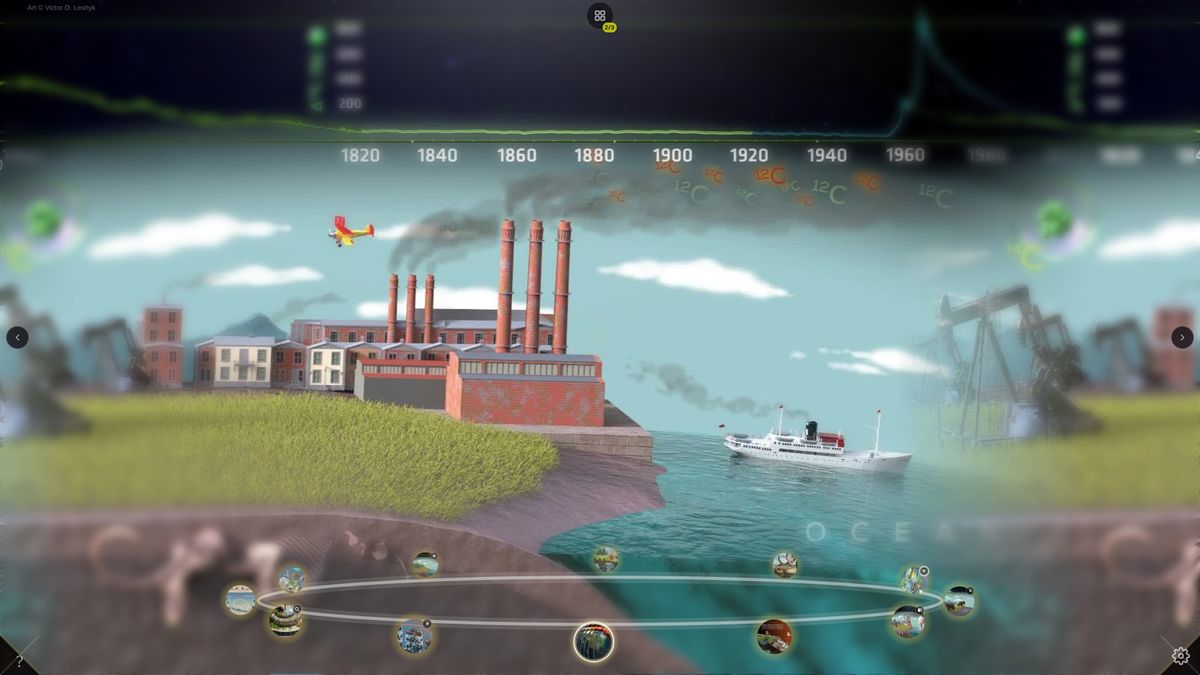
A day passes over the scene — sun angle, sky colour, stars, moon, mist, rain, and ambient life. Computed while you watch rather than pre-rendered, so no two visits sit at the same moment.
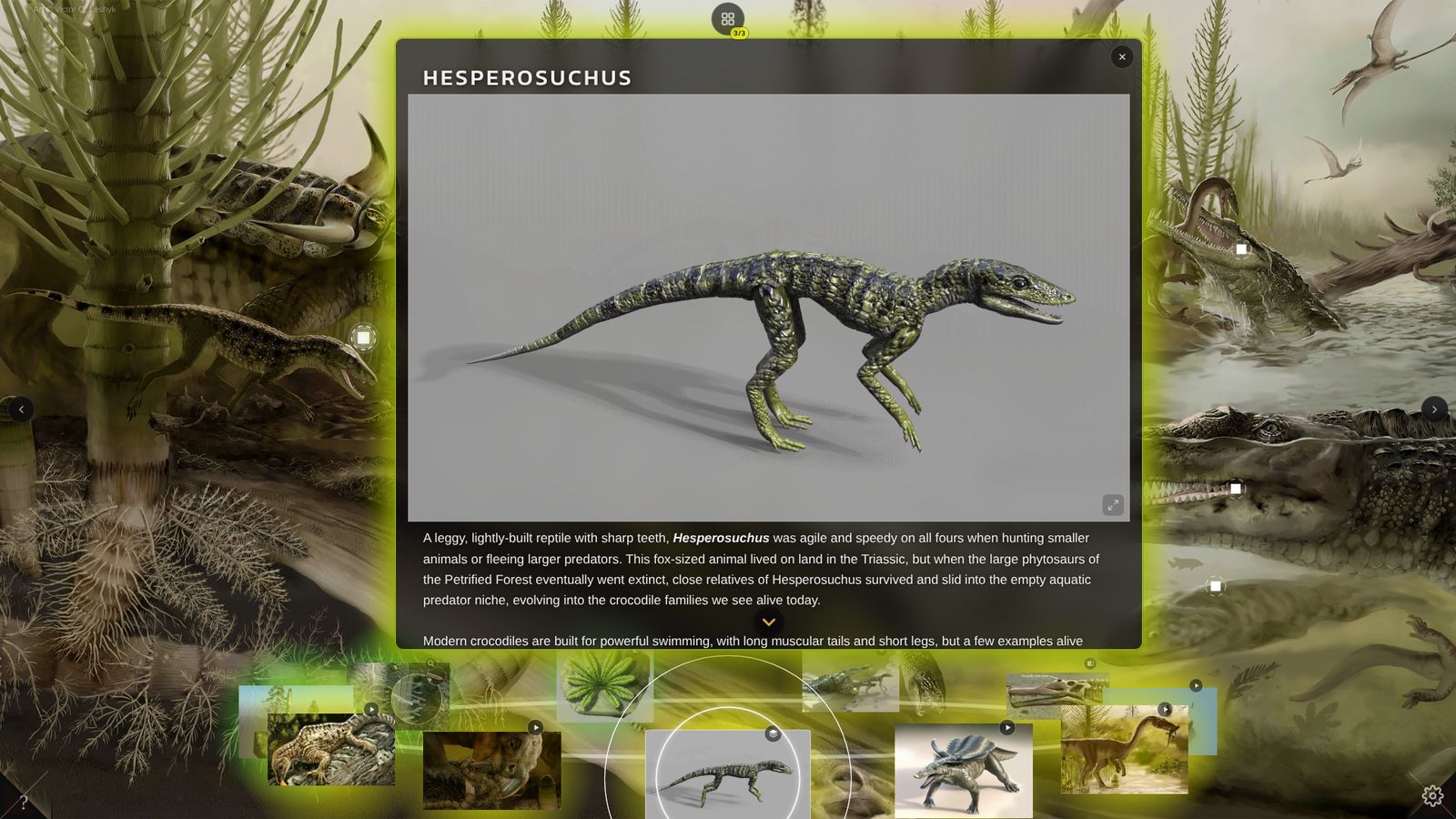
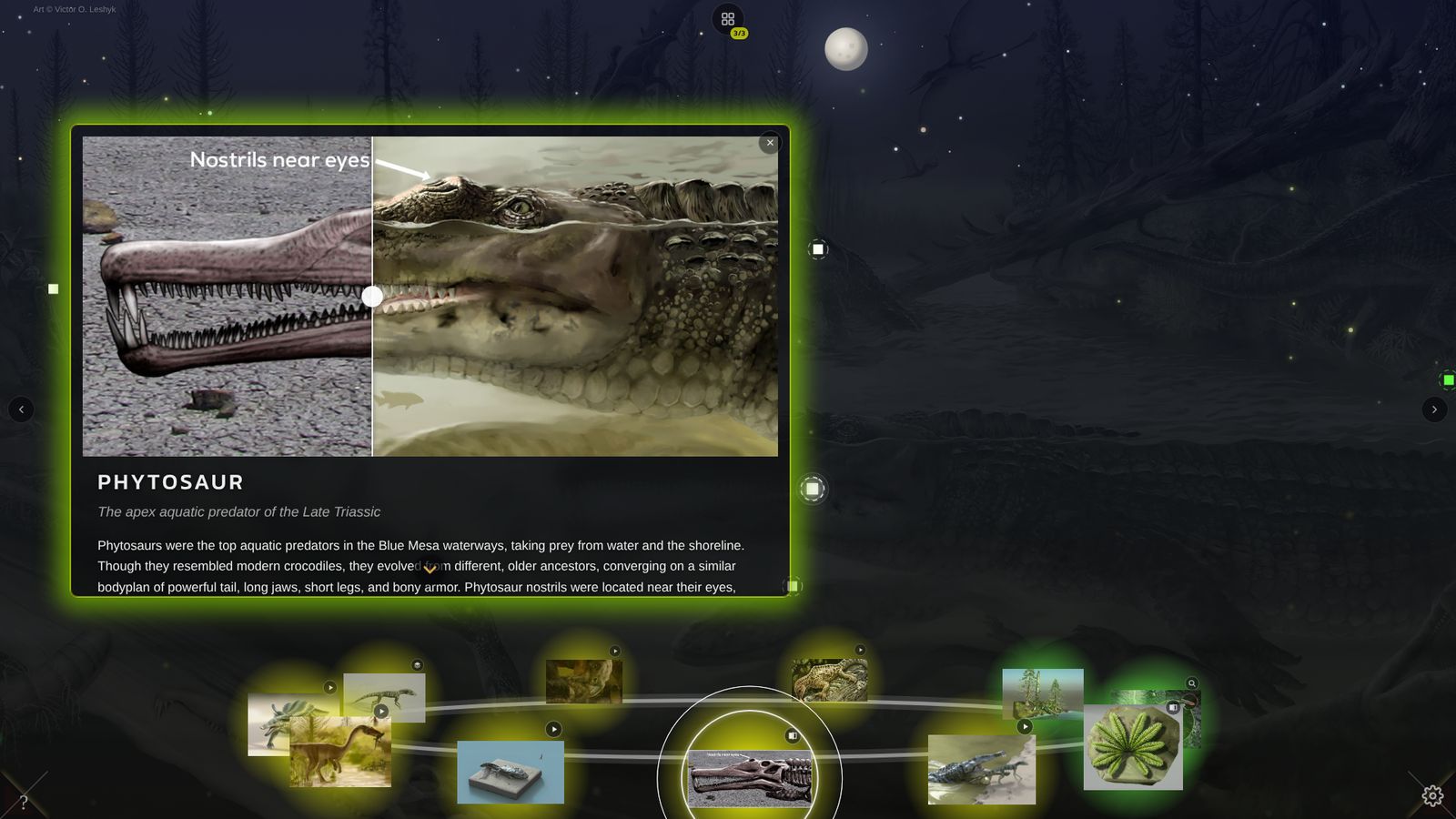
Points of interest fixed to places in the illustration. A visitor taps one and a card opens: text, images, video, or an interactive module, in whichever language they chose at the door.
A tile board, a timeline, a filmstrip, or the scene itself. Which one a venue gets is an authoring decision rather than a build, and it can differ between the kiosk and the phone in the same package.
The same package serves a wall-mounted kiosk, a visitor's phone, and a desktop browser. Layouts reflow to the screen in front of them; nothing is rebuilt per device.
Scenes, timing, effects, and translations live in the content package. Day-to-day changes are content changes, and they do not route through a developer.
The Diorama Engine is built for rooms with people in them. Screens that run for eleven hours and go back to an attract loop when nobody is there. Phones held in one hand in bright daylight. Screen readers, reduced motion, and four languages in the same package. The unglamorous half is most of the work.
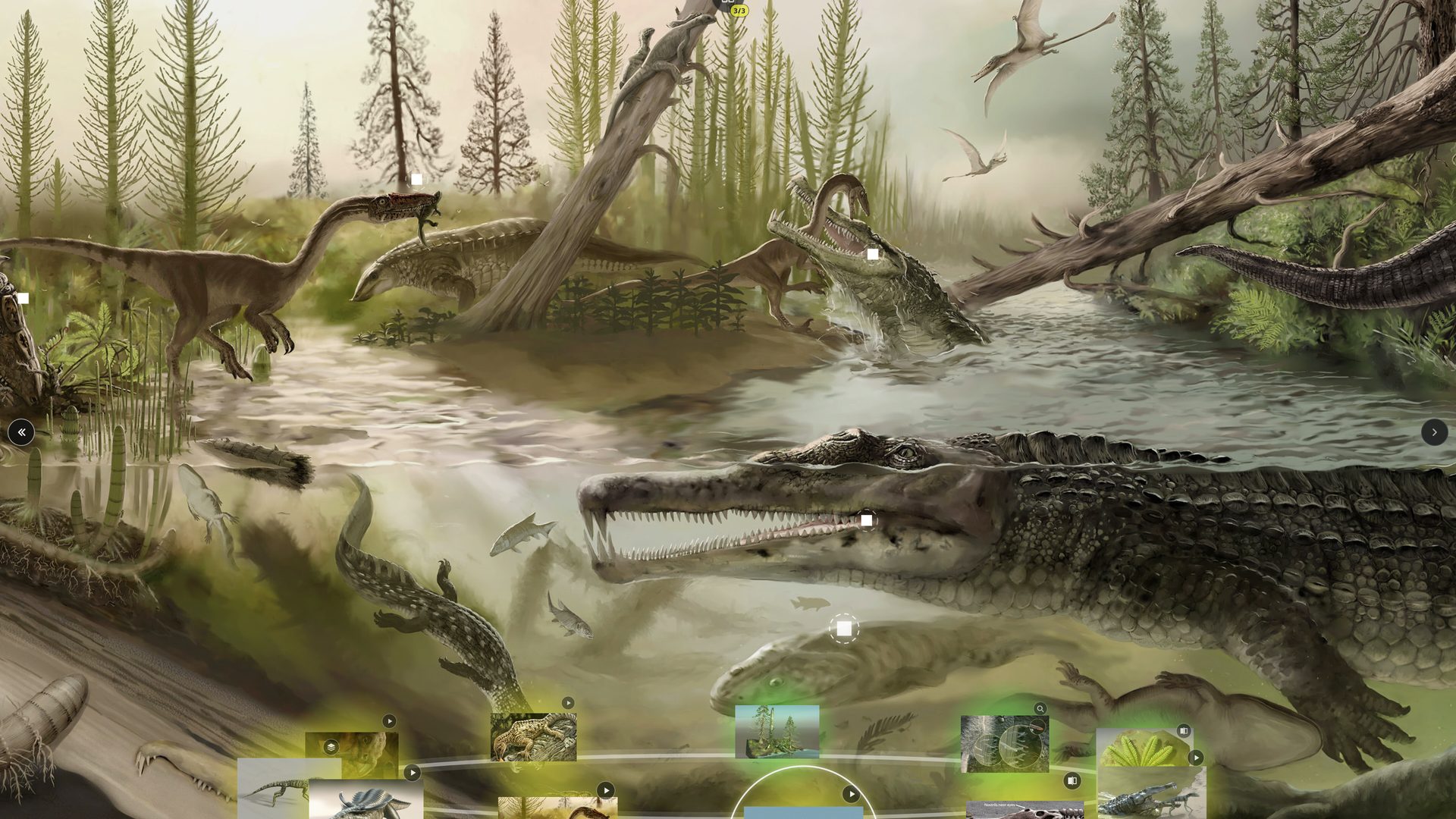
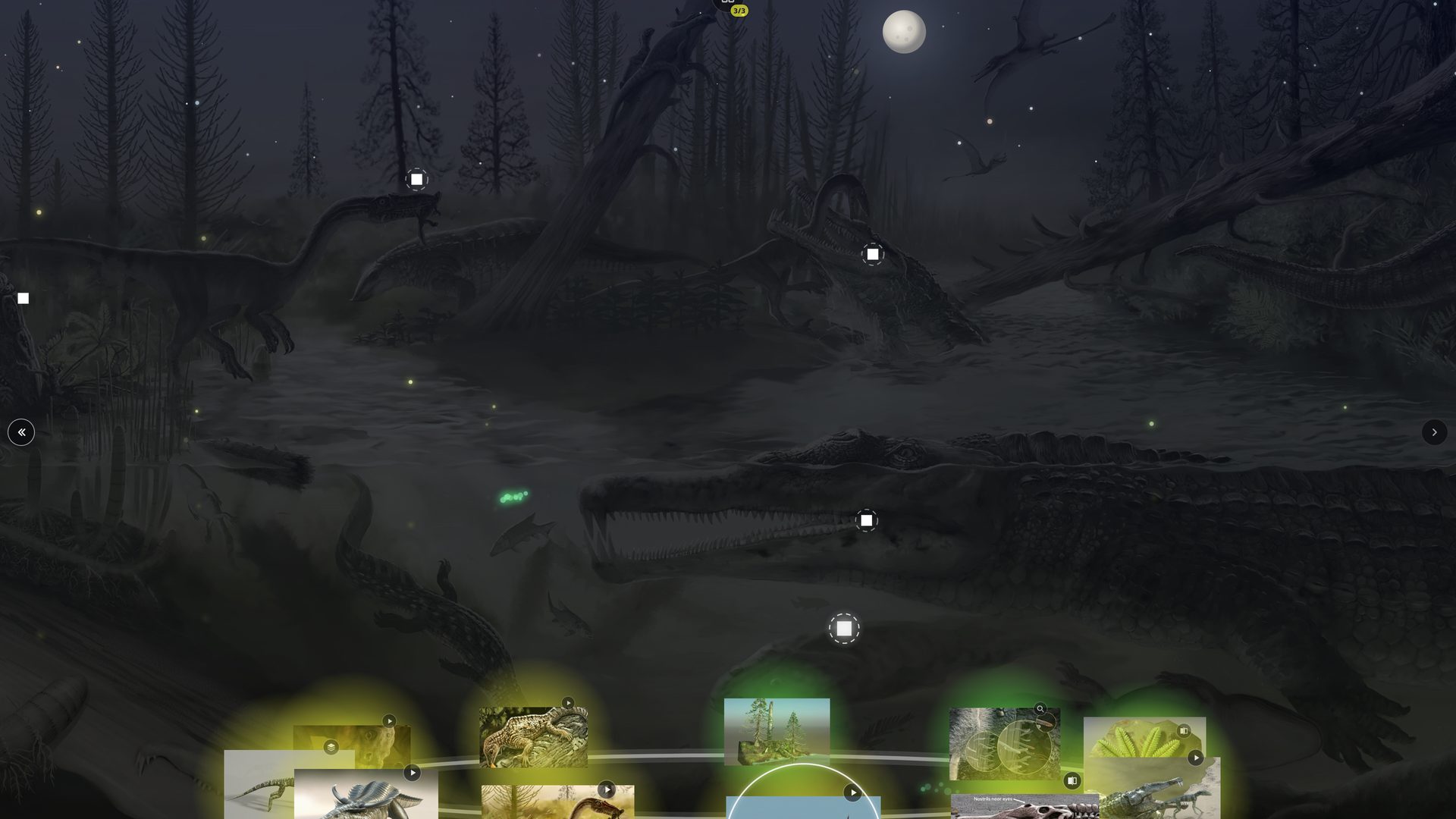
The same place, twelve hours apart. Drag the handle.
Neither of these is a video or a second painting — the light, fireflies, sky, moon and the water are computed live while the visitor watches, so no two visits sit at the same moment.
 MIDDAY
NIGHT
MIDDAY
NIGHT
Like a visual jukebox, Diorama Engine can present any track on demand from a selection of many. Unlike a jukebox, it lets you remix those tracks while you're experiencing them.
The layout reflows to whatever surface it lands on: a wall, a kiosk, a tablet on a plinth, a laptop, a phone held sideways, then upright.


The engine doesn't change between them. Only the content package does.
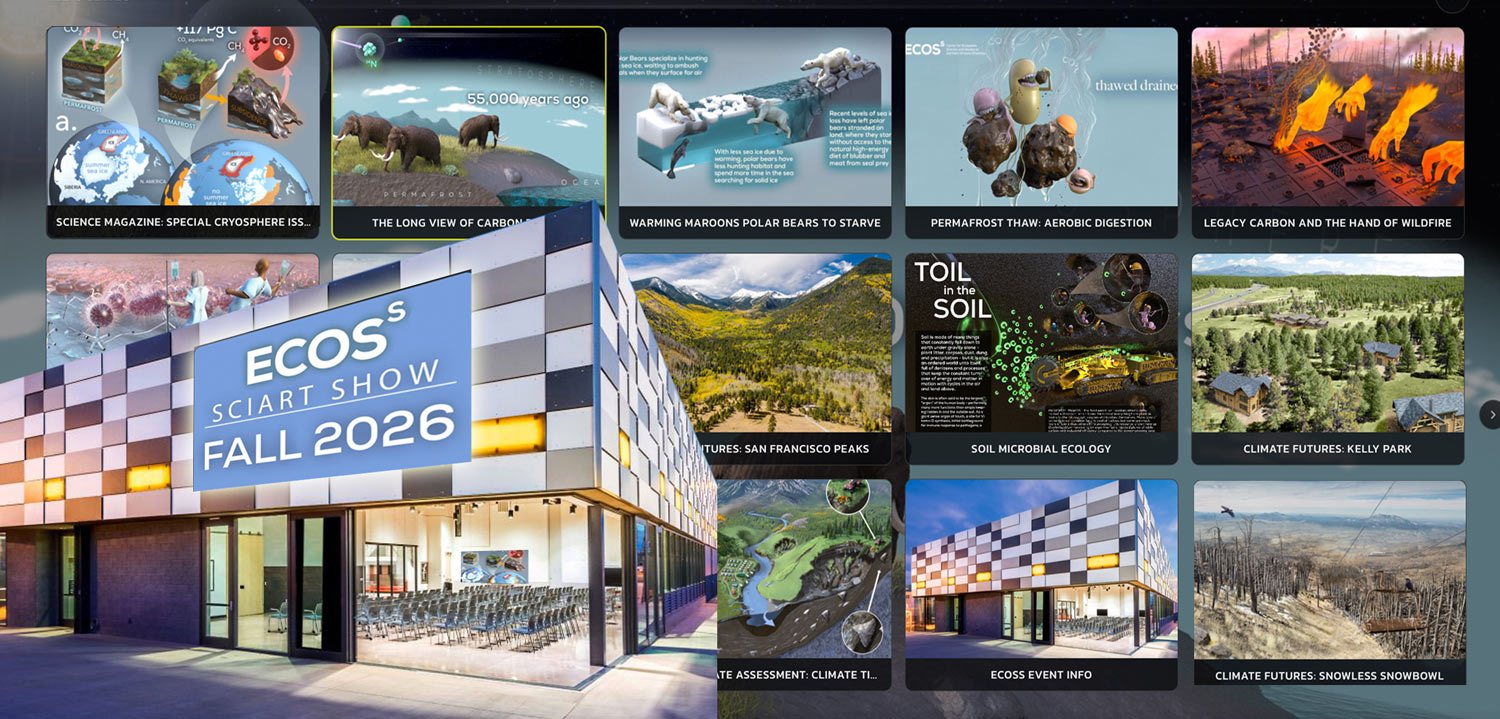
Museums, parks, science centres, visitor centres. A reconstruction or a landscape that a room full of people can walk up to, in four languages, running eleven hours a day and returning to an attract loop when nobody's there.
Live: the demo above, the Triassic at Paleovista, and the ECOSS Sci-Art Show stations at Northern Arizona University.
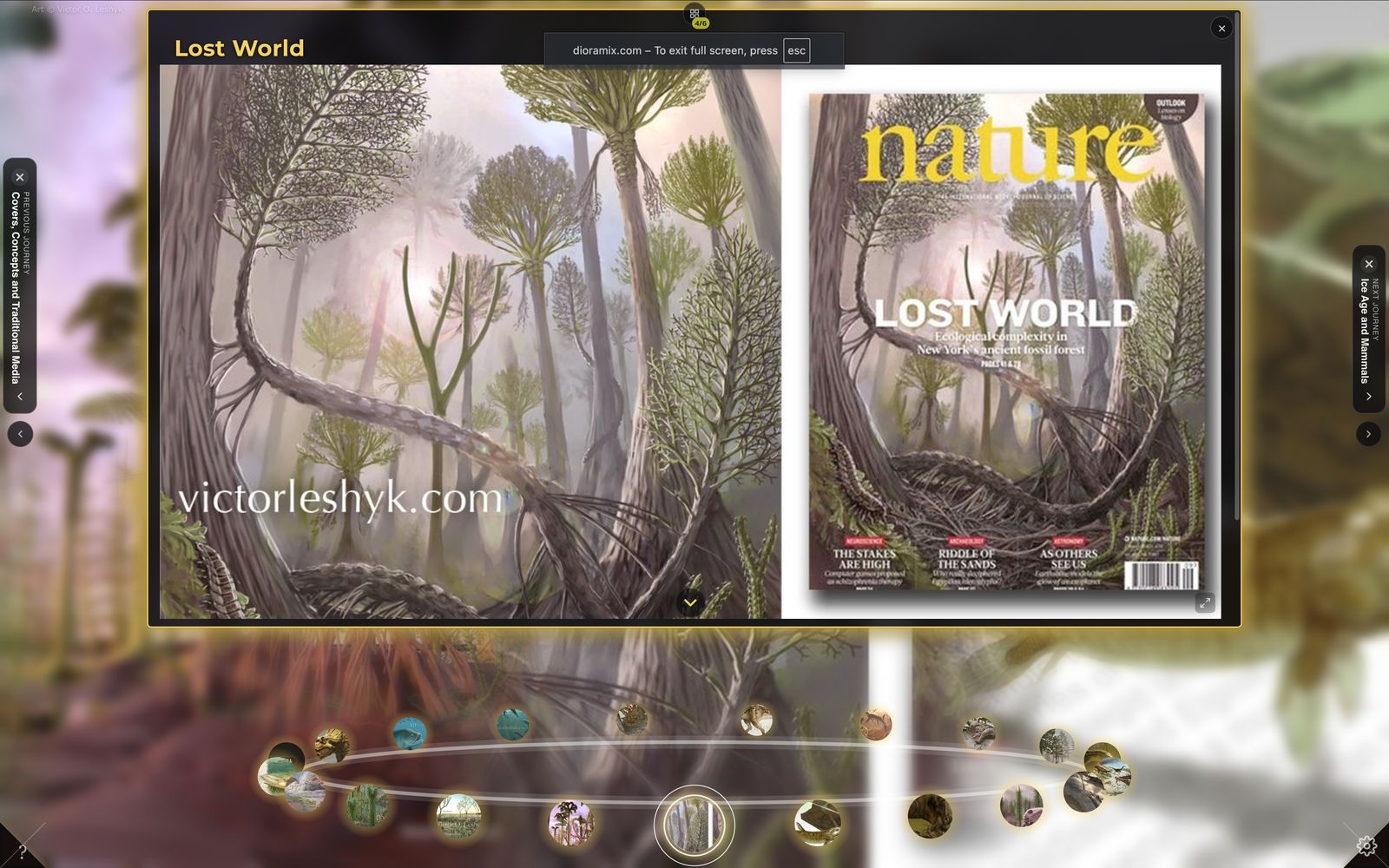

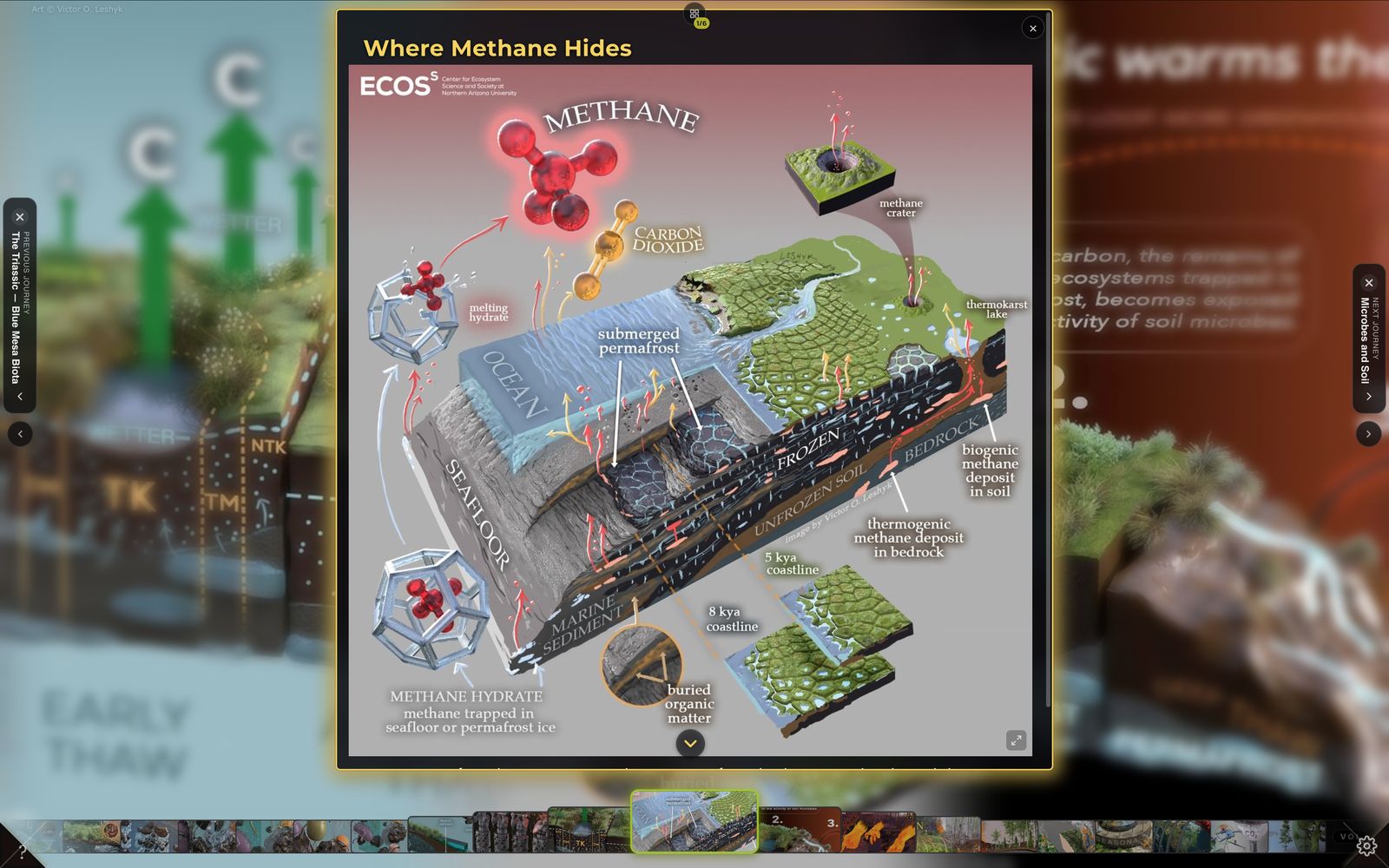
Galleries, studios, makers, retail. A wall of work becomes a scene: each piece an anchored point, opening to whatever you want beside it — provenance, process, dimensions, price, a video of the thing being made.
The demo's first journey is exactly this: one artist's body of work, each piece opening onto its story.
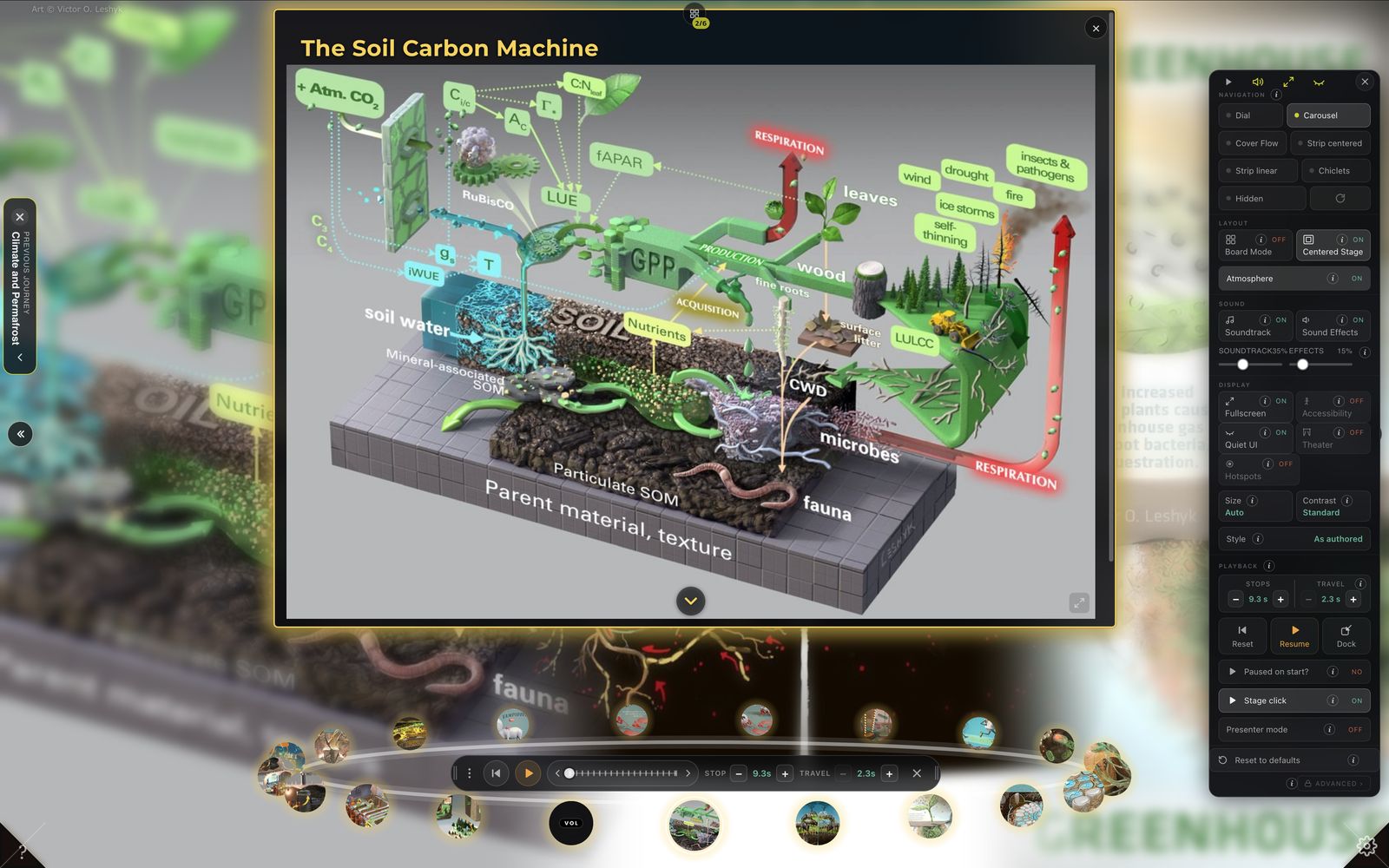
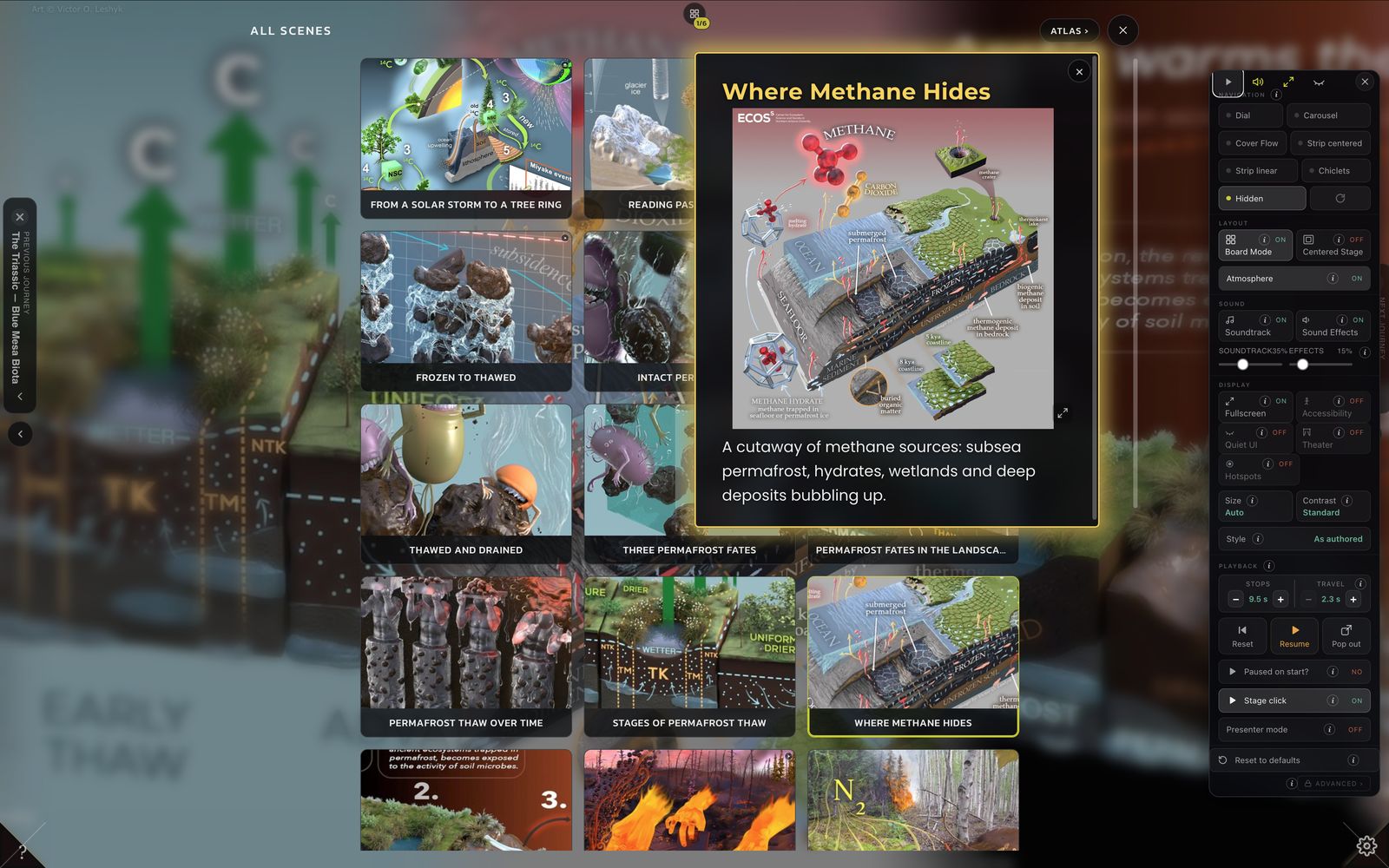
For researchers, artists and specialists who need to show work somewhere and can't carry the room with them. Author the package once, then run it on a conference screen, a laptop, a tablet handed across a table, or a link.
Authoring happens in the engine's own shell — no code, and no developer between you and a change.
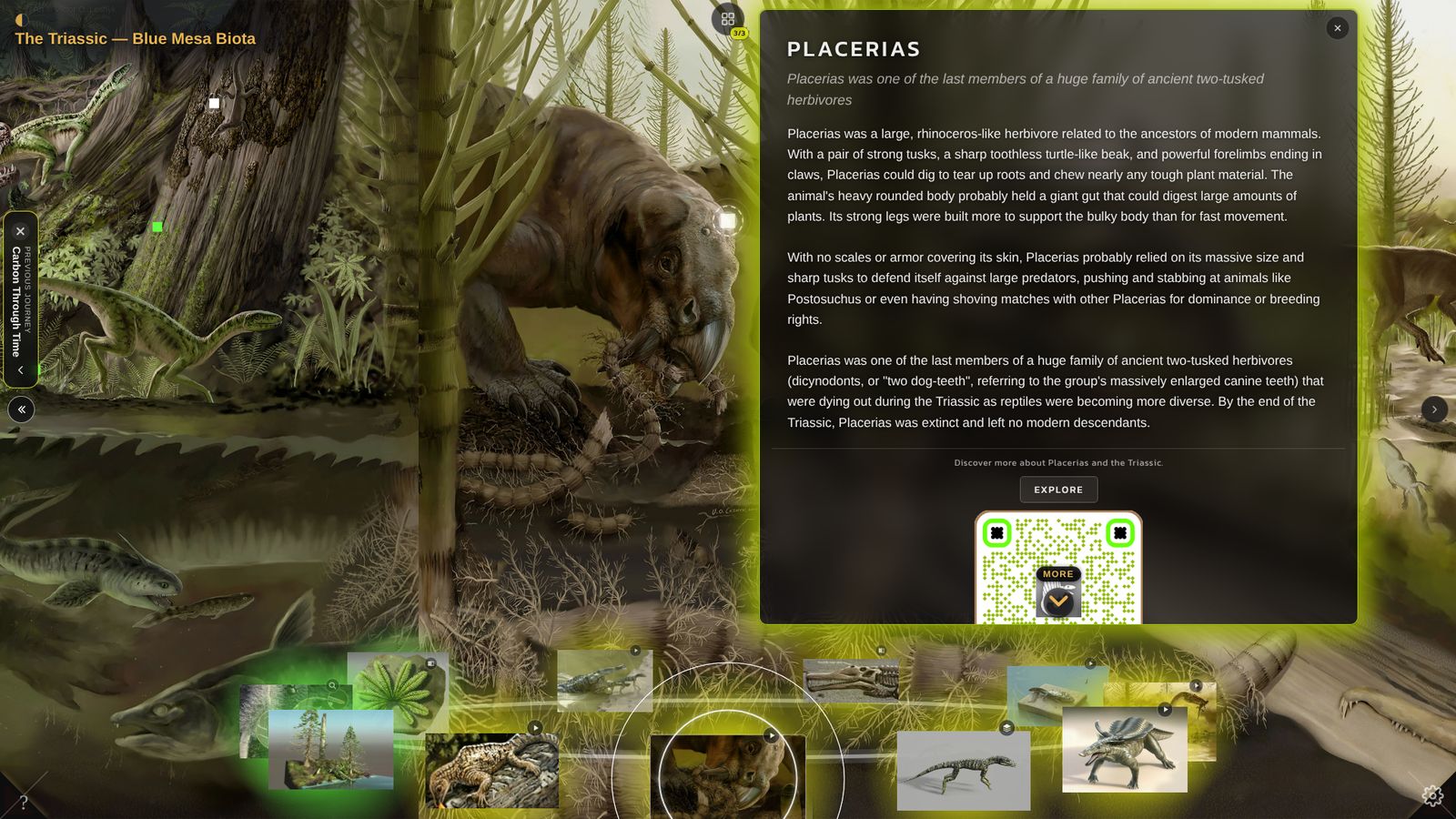
A Triassic Blue Mesa snapshot, come to life — the demo's third journey.
Eleven points of interest across a landscape reconstructed by paleoartist Victor Leshyk, with a full day cycle running over it. Not a video and not a slideshow — the engine, performing the package, on whatever screen you open it with.
Give it a minute before you tap anything. The light is doing something.
A working demonstration. The engine and its artwork are proprietary; device and network details are recorded while it runs — what this site collects.
“Adapting space and time around my storylines in ways I never imagined.” Victor Leshyk, paleoartist — Paleovista, LLC
A studio’s own site
Victor Leshyk’s studio runs the Triassic diorama from its own site — Blue Mesa’s Late Triassic, stop by stop, with his reconstructions as the stage.
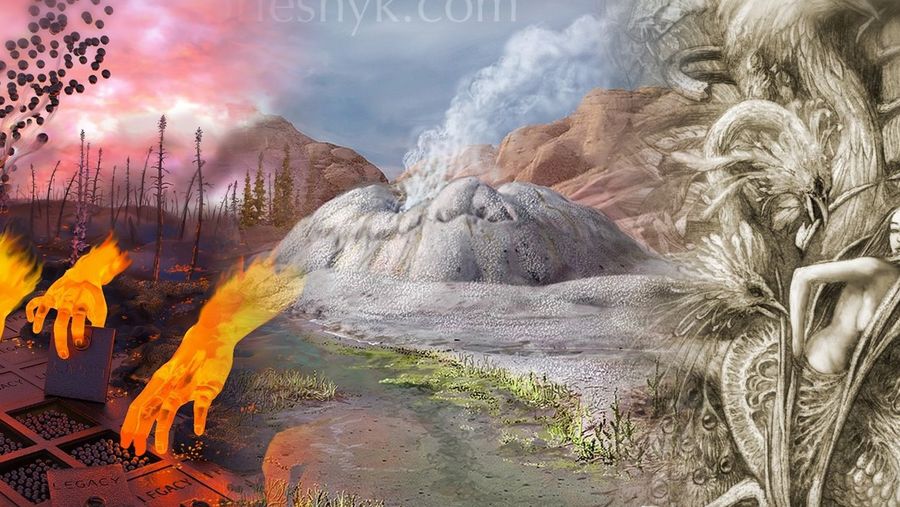
An artist’s body of work
Victor’s own diorama, on his own address: climate and permafrost, microbes and soil, deep time, ice-age mammals, covers and traditional media — one stage for all of it.
An event showcase
Northern Arizona University. An event package launched from the show’s own pages — the same engine, a different package, standing up in days rather than months.

A research network’s story
A standalone package for the AWARE permafrost-carbon project. Same engine, its own story.
Next: Petrified Forest National Park — an interpretive installation, plus GPS location-aware points of interest in the park and a shareable virtual guided tour, in discussion.
“I kept finding clients stuck between sharing content that was too important for a casual social media post, yet would risk glazing most eyes over if delivered in whitepaper form. The Diorama Engine serves to unbound these orphaned stories for a broad range of audiences and presentation endpoints.”
Steve Akash, founder — DIORAMA ENGINE
If you have a story, collection, research set, or vision to share, the Diorama Engine is ready for you...
Enquiries are answered personally, usually within a day.
Your message is emailed to us and kept only so we can reply. It isn't added to a list, sold, or shared — what this site collects.
Sent. We'll come back to you.